
Place
Nilfgaardian Empire
Most powerful empire in the history of the known world
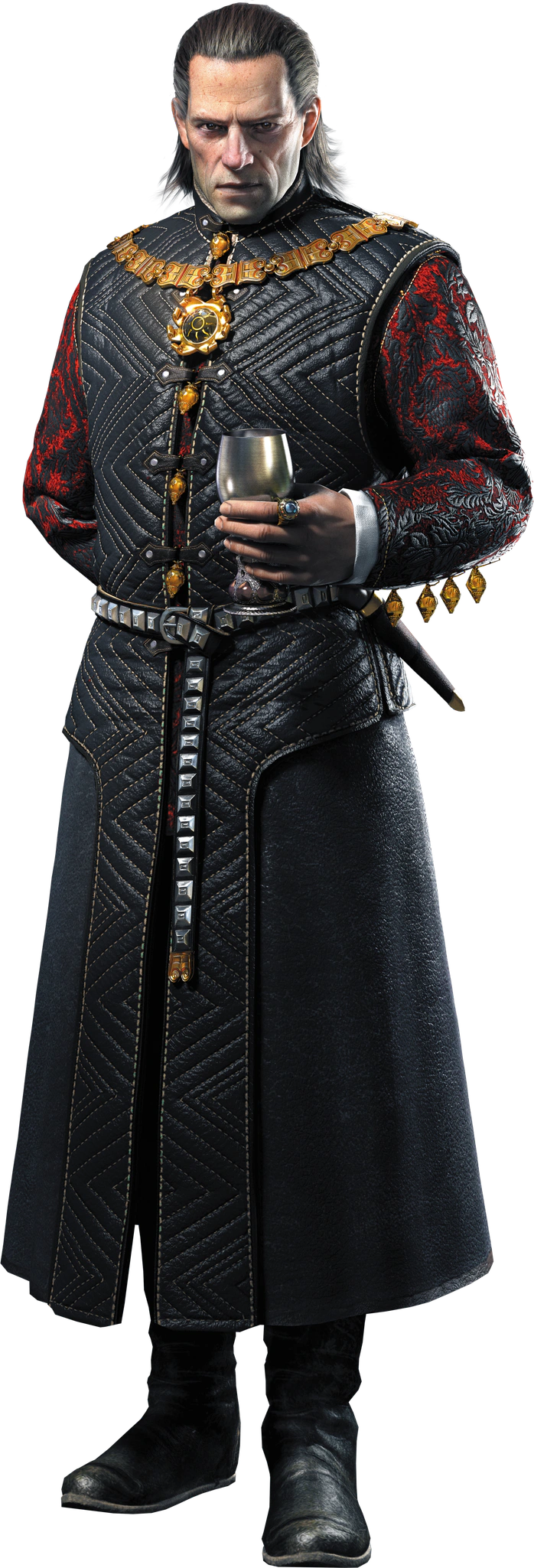
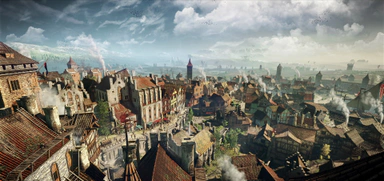
The Nilfgaardian Empire (Ceas'raet in Nilfgaardian language) is the most powerful empire in the history of the known world. It is located in the southern part of the Continent and boasts both a thriving economy and a strong, well-trained army with talented commanders. It has expanded mostly through the conquest of foreign countries, which were then turned into provinces of the Empire. The Empire's inhabitants believe that "real" Nilfgaardians are only those born in the heart of the Empire, and not those born in the conquered provinces.
The provinces are ruled by either stewards or kings (in cases in which a king willingly surrenders, he retains his throne but is subject to the Emperor or just a vassal). The empire has expanded throughout the years, conquering new lands and going as far to the north as the Yaruga river during the reign of Emperor Emhyr var Emreis.
In the Northern Kingdoms, the Empire is portrayed as an overarching antagonist, with many free people of the North expressing hatred towards it with passion.
National emblems
The Great Sun, symbolizing solar radiance and solar heat, is the primary symbol of the Nilfgaardian people. It appears in imperial heraldry, on coins, banners of armed forces as well as the mark of the Viroledan swordsmiths.
Coats of arms
The first coat of arms was created by our member SMiki55. The second one, by SMiki55 and Ruttou, is based on an illustration from Czech edition of the Saga (the drawing beside it).
Flag
These flags were created by SMiki55.
Notable Nilfgaardians
Emperors
Others
Torres var Emreis
Fergus var Emreis
Usurpator
Morvran Voorhis
Jan Calveit
Ardal aep Dahy
Assire var Anahid
Cahir Mawr Dyffryn aep Ceallach
Carthia van Canten
Ceallach aep Gruffyd
Cynthia
Declan Leuvaarden
Fringilla Vigo
Henry var Attre
Joachim de Wett
Joanna Selborne
Lamarr Flaut
Menno Coehoorn
Peter Evertsen
Prince Voorhis
Reef
Roderick de Wett
Shilard Fitz-Oesterlen
Stefan Skellen
Tavar Eggebracht
Vattier de Rideaux
Xarthisius
Notable locations
• Belhaven
• Cintra
• City of Golden Towers
• Claremont
• Darn Rowan
• Dun Dâre
• Fano
• Jealousy
• Loc Grim
• Metinna
• Rhys-Rhun Castle
• Stygga Castle
• Thurn
• Unicorn
• Viroleda
• Winneburg Castle
Geography
Since the Peace of Cintra, the Empire spans from the Yaruga river in the north all the way down to southern parts of the continent, where only a short distance separates it from other mysterious and unknown lands such as Hannu, Zangvebar, Barsa, and Ofir.
To the west Nilfgaardian border is defined by the coastline of the Great Sea, to the east lies Tir Tochair mountain range as well as desolate wildernesses and barren grounds. On the East of the Empire it lies the endless Korath desert, also known as the "Frying Pan".
According to Queen Meve of Lyria and Rivia, the Empire is 30 times bigger than Lyria.
Climate
The Empire spans a huge area and thus the climate varies greatly, from warm but mild in Cintra to hot and sunny weather around the Alba and down to the steppes and deserts bordering with the far south. Some territories have microclimates, which are dictated by both the land (like in the mountains or river deltas) to weather such as rain and wind.
A rather large portion of the Empire's territory is also based around the meridians. Sea coasts consist of green, lush, and fertile lands while the more inland areas tends to be barren, with the major exception being large river valleys.
Birth of the Empire
Nilfgaardians believe their history reaches back to the 2nd century. The first settlers mixed with the Black Seidhe, creating a nation consisting mostly of elven language, beliefs, customs, and culture. Meanwhile, the valiant shepherds inhabiting scattered settlements on the Alba slowly incorporated the surrounding nations, appropriating their best traits like culture, technology, and military strategies, offering them safety and order in return. The two groups eventually merged during various conquests by neighbouring nations and periods of freedom, creating a unique heritage mixing the achievements of elves, Vicovarians, Etolians, and several Alban tribes. At some point of their history, the Kingdom of Nilfgaard emerged.
The monarchs were aided by a council of advisors, which became known as the Senate. Over time, the Senate gained more and more power, becoming a legislative body. During this period Nilfgaardian influences started to expand and neighbouring lands were slowly Nilfgaardized. The peoples brought under the dominion of the empire through the "diplomacy of steel" were expected to learn its official language and adopt elements of the victors' culture.

Eventually several lands outside the Lower Alba were incorporated into the realm, either willingly or by force. The title of Imperator appeared, at first only as position in the army. Known lands that joined during that period included Rowan, Ymlac, Ruach, Daerlan, Magne and Winneburg.
In the early 12th century Imperator Torres var Emreis overthrew the Senate and took absolute power. At first he referred to his realm only as a "kingdom", but during his later reign the term "empire" was coined –- and the Emperor with it.
Emperor Torres turned Nilfgaard into an absolute monarchy. Through a series of edicts Torres greatly diminished the role of the Senate, the nobility, and Nilfgaard's mages. Instead, the Emperor based his regime on the cult of the Great Sun (Ard Feainn), of which he also became the Chief Priest. The March 8th Edict established the cult as the state religion and used its icon for the coat of arms of the Empire. Emperor Torres also attempted to expand the borders of his Empire, invading Vicovaro. However, despite initial successes, he was eventually forced to retreat, and the Empire's territorial expansion was halted for the time being.
After Torres' death, likely in the early 1200s, his son Fergus var Emreis ascended the throne. Torres was an especially aggressive ruler, set at expanding the borders of his Empire. Thus, in 1216, Emperor Fergus var Emreis invaded Etolia. The Nilfgaardian Army quickly overwhelmed the latter, annihilating its power structures and decimating the values defining Etolian life. Fergus subjected Gemmera in that year as well. Seeing the destruction that befell their neighbours, Vicovarian nobles, desperate to avoid the same fate, influenced their ruler, and Vicovaro asked to join Nilfgaard willingly.
Despite his successes on the international stage, Fergus was widely seen as a weak ruler. Opposition fomented against his rule and ultimately he was overthrown by a General in the Nilfgaardian army known only as a Usurper in 1233. Fergus was captured and the Usurper attempted to coerce him into ceding the throne by threatening the life of his son and heir, Emhyr. Because he refused, Fergus was ultimately murdered, while Emhyr was cursed by the mage Braathens, who turned him into a humanoid hedgehog. Despite having dogs set on him, Emhyr managed to escape and, with help from his own acquaintances, left the Empire.
The Usurper's reign saw a proclamation of a national amnesty and the diminishing of the power of the cult of the Great Sun, which was seen by the Usurper as a bastion of the House var Emreis's influence. The Usurper, mindful of his peasant background and lack of legitimacy to the throne, desperately attempted to strengthen his claim. Among other things, he produced a series of falsified documents indicating that he was in fact Emperor Torres's illegitimate son.
The Usurper also continued the territorial expansion started by his predecessor. In 1239 he annexed Ebbing, which the Empire's historians see as the beginning of the First Northern War. Subsequently Metinna, Nazair, and Maecht were conquered by the Empire by the mid-1250s.
However, just as was the case with Fergus, opposition was slowly fomenting against his rule. The nobility which supported his ascension expected the Usurper to be nothing more than an easily-manipulated figurehead, while in fact the new Emperor proved himself to be a stern and heavy-handed ruler.
In 1257 an uprising led by Ardal aep Dahy, Vilgefortz, and other of Emhyr's supporters, stormed the Imperial Palace and killed the Usurper. Emhyr var Emreis, the rightful heir to the throne, who was banished from his country, entered Nilfgaard once again and became the new Emperor, gaining the nickname "the White Flame Dancing on the Barrows of his Enemies" or in Nilfgaardian language, "Deithwen Addan yn Carn aep Morvudd".
First Northern War
During his reign, Emhyr continued the expansion started by the Usurper, beginning the First Northern War in 1263 by invading Cintra, winning the Battle of Marnadal at the Marnadal Stairs, before marching to Cintra's capital, which was besieged and most of the inhabitants slaughtered. Meanwhile, Emhyr tasked Cahir Mawr Dyffryn aep Ceallach, a knight within his secret service, to capture Cirilla, the granddaughter of Queen Calanthe of Cintra and Emhyr's secret daughter (and whom he planned to marry). However, Cahir failed in his task and was imprisoned for two years in the Citadel at Nilfgaard while Emhyr continued to try and push into the North. This came to an abrupt halt though during the devastating Battle of Sodden Hill where the North's mages played a crucial part and ended the First Northern War with Nilfgaard's defeat. Despite this, the Empire held fast to Cintra and in 1267 managed to suppress a rebellion, capturing their leader, Windhalm of Attre, and having him executed as a show of force.
Second Northern War
Still set on taking the North, in the summer of 1267 Emhyr set in motion plans to start the Second Northern War, this time enlisting the help of several powerful mages to stage a Thanedd coup to remove the North's mages and thus their advantage that won the last war. While the plan went awry, it ultimately led to the Brotherhood of Sorcerers downfall and, with King Demavend of Aedirn faking an invasion at his borders to try and make it look like it was the work of Nilfgaard, Emhyr used this to mobilize his army and invade the North once again. With the North in chaos from Vizimir II's assassination, Nilfgaard's invasion, and the distrust towards mages, it looked like Nilfgaard would finally capture the North.
However, to truly calm down the people of Cintra, Emhyr still needed Ciri and had people out looking for her. While he was presented with a girl around her age a few months after the Thanedd coup and officially named her queen of Cintra, he knew she wasn't his daughter and only recognized her as queen to quell the masses while he continued the search for the real one.
Stefan Skellen, one of the men entrusted in finding Ciri, had other plans in mind though, wanting to overthrow Emhyr and the monarchy and make the Empire a democracy instead. Together with Ardal aep Dahy, Broinne, D'Arvy, Joachim de Wett, and Berengar Leuvaarden, they decided to find Ciri but then kill her to prevent the continuation of a monarchy. This conspiracy failed though as Berengar Leuvaarden later revealed the plan to Emhyr for leniency. While he was spared, Emhy had Stefan Skellen captured and ordered his execution after a trial.
In the meantime, Nilfgaardian forces clashed against Temerian ones in the Battle of Brenna, where the Imperial Army lost and Field marshal Menno Coehoorn was killed. Following this huge failure, the Empire sent ambassador Shilard Fitz-Oesterlen to negotiate during the Peace of Cintra: in the end the Empire was forced to surrender once again to the North but was allowed to keep Cintra. Although the Empire was officially defeated, the huge damage caused by the war to the Northern Kingdoms forced the latter to buy great amounts of food from the Empire and from Kovir and Poviss, which greatly enriched them.
After Ciri was found, Emhyr was still set on marrying her until he realized the only thing that mattered to her was to be with her adoptive parents. With this, he let her go and, having fallen for False Ciri, who was still officially declared as Cinta's heir, married her in the spring of 1268, officially making Cintra part of the Empire.
Third Northern War
Third Northern War started around 1271 after the failed summit in Loc Muinne. Once again the army, commanded by the new Field Marshal Havart var Meohoen, invaded the North conquering the kingdoms of Aedirn, Lyria, Rivia, and Temeria, which remained without a leader after the Kingslayers murdered both Demavend III and Foltest by order of Emhyr. When Nilfgaard approached Kaedwen, King Radovid V of Redania invaded his neighbors and assumed control over Kaedwen. Instead of two weak enemies, Nilfgaard, who in the meantime conquered the capital city of Vizima in Temeria and was stationed in Velen, now was forced to face one large, powerful one.

If Emhyr wins the war: After the assasination of Radovid and the death of Sigismund Dijkstra, the North without a leader couldn't defeat the armed forces of Emhyr, who conquered the whole North.
If Radovid wins the war: Thank to the strategic moves of Radovid, Emhyr was ultimately defeated by Redanian troops and was ultimately assassinated once returned in Nilfgaard by his opposition, tired of his continuous failures during the war.
If Dijkstra wins the war: With Sigismund Dijkstra as head of state after Radovid's death, the North managed to defeat Emhyr's army, who was later assassinated by his opposition once returned in Nilfgaard.
Society
While the Empire's population comprises several different cultures and nations, the authorities are keen on slow "Nilfgaardization" of minorities, that is replacing local values and customs with those of "proper Nilfgaardian", Lower Alban heritage. Internal migration within imperial borders are encouraged: colonies of Lower Alban settlers are established within troubled provinces, while non-Nilfgaardian peasants loyal to the Empire are encouraged to settle in newly-conquered realms through attractive offerts; rebellious regions are cleansed through enslavement or ethnic cleansing of groups deemed "problematic".
On the other hand, Nilfgaardian Empire in general is considered a safer home than most Northern Realms for many nonhuman races. Save for groups like Wood Elves, nonhumans living in the Empire consider imperial system harsh, but just.
Military and intelligence
The army count during the Second Nilfgaard War was ca. 320,000, as 300,000 attacked the Northern Kingdoms, while the remaining 20,000 - 50,000 remained in the Empire.

The army's operations are backed by Imperial Military Intelligence. Rivalled only by Redanian Secret Service, the institution is able to gather information and sow dissent far beyond the frontlines.
Journal entry
The Nilfgaardian Empire is a powerful and ancient realm in the far south. Its capital is the city of Nilfgaard, located on the river Alba. The Empire arose through conquests, assimilating nearby kingdoms. Only the inhabitants of lands near the river Alba have the right to call themselves Nilfgaardians. A significant amount of elven blood runs in the veins of the people, while their language is a variant of the Elder Language. The Empire is aggressive and willingly invades neighboring lands. Its war with the Northern Kingdoms ended five years ago, yet in spite of the peace treaty, Nilfgaard has failed to give up its claims on the northern territories.
The Witcher Adventure Game
• Led by Emperor Emhyr var Emreis, also known as the White Flame Dancing on the Graves of his Enemies, the Nilfgaardian Empire is the most powerful state in the known history of the Continent. With the Emperor's appetite for constant expansion, the southern superpower is a constant threat to the kingdoms located in the north. Nilfgaard's booming economy and superior army make it a force to be reckoned with. Nilfgaardians believe in lineage and racial purity, which makes them hated and feared by the free peoples of the Continent—only those born within its original borders are considered true citizens. However, once conquered by the Empire, as long as you serve its greater goals and remain obedient, you're more than likely to live to see another day. Nilfgaard's dominant religion is the cult of the Great Sun, which is reflected by the sun symbol on the Empire's coat of arms. Although the Emperor does not officially condone other beliefs, as long as no one mixes their gods with current political affairs, peoples acquired via the Empire's expansions are free to pray to whatever they want.
Sources
Adapted from the original article, under CC BY-SA 3.0.