
Group
Merpeople
Race of intelligent underwater humanoids in the Great Sea
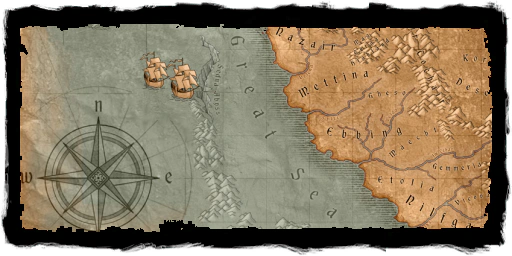
Merpeople are a race of intelligent underwater humanoids in the Great Sea. Males are called mermen or tritons, while females are known as mermaids (Skellige jargon: havfrue).
Physical description
Merpeople are a race resembling a half-human (male or female) with fins and a fish's tail in appearance. The females are similar to nymphs and are very beautiful. So beautiful in fact that their graces are a subject of many sailor songs. They are described as having flowing celadon-green hair, light green nipples, and long fishtails covered in scales. The scales have alchemical properties and can be used as ingredients by mages.
They are able to breathe air but can stay above water only for short periods of time because the sun hurts their skin.
Merpeople are often confused for siren/nixa; a vicious monster. A notable difference though is that sirens have large, bat-like wings while merpeople are far more peaceful and always wingless.
Mental traits
The race appears to wield mysterious power and rule the undersea world—even the vodyanoy respect them. They can summon the dreaded krakens if the need arises.
What's more, should a merperson find themself in trouble far from the deep sea, they would utilize an amulet which, combined with their song, leads nixae-sirens towards them.
History
They're an old race, known to inhabit the Great Sea since well before the First Landing of Nordlings in the 8th century. Although peaceful, they haven't always been friendly to humans, having fought with them at least once during the numerous race wars.
Culture
Merpeople, like nereids and sea witches who live with them, use a euphonious version of the Elder Speech, which puts a great emphasis on melodiousness and intonation. It's said to be related to the dialect used by dryads of Brokilon.
They train dolphins and sharks as mounts in a manner similar to how surface-dwellers train horses. Tritons are alluded to have good relations with hippocampi as well.
Sources
Adapted from the original article, under CC BY-SA 3.0.