
Person
Raymund
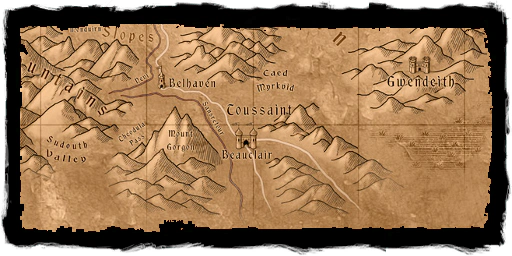
Raymund was the Duke of Toussaint and Lord of Beauclair from 1258 until his…
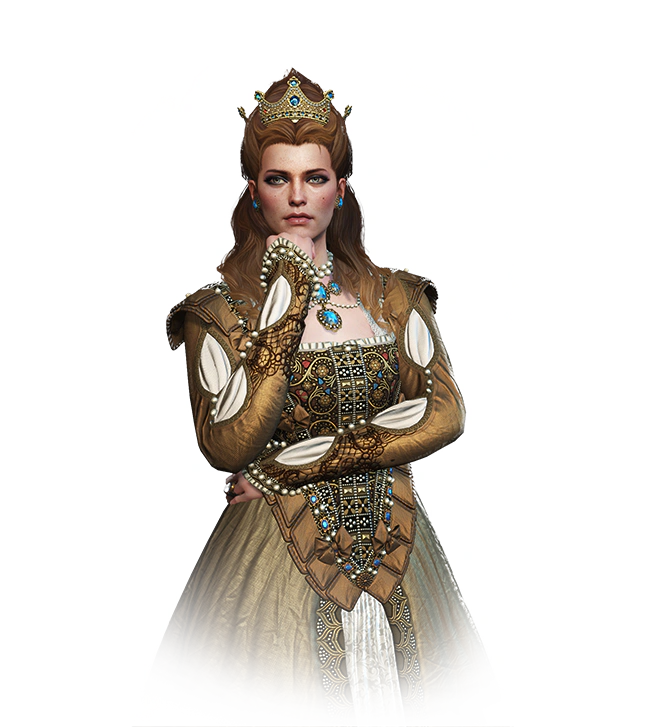
Raymund was the Duke of Toussaint and Lord of Beauclair from 1258 until his death by apoplexy in 1265. He held the titles by the virtue of his marriage with Anna Henrietta, the trueborn duchess in keeping with inheritance customs of the ducal house of Toussaint.
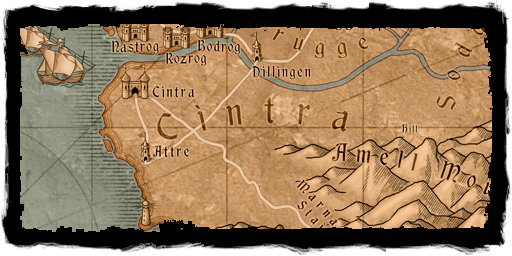
Unlike his wife, Raymund was not popular among his subjects. Many viewed him posthumously as a man so despicable that "he would have given the very Devil stomach ulcers in half a year." On the personal side, he gained notoriety as a womanizer. It was no secret he constantly slept around with other women, even as far afield as Cintra.
Early years
Raymund and the heiress Anna Henrietta were betrothed already during the reign of her parents, the Duchess descended from Carolina Roberta, and her husband, the Duke. The later organized the annual grand turney of knights at one point, inviting Dandelion to accompany the event with his poetry. Dandelion, drawn to the heiress from a distance by her beauty, composed a love ballad. He did not dedicate it to her overtly to not insult Raymund. While Anna Henrietta found it delightful, her father the Duke refused to pay the bard.
Reign
Unfaithful marriage
In 1261, he had been staying in Cintra for a council but delayed returning home, wanting to stay with a lover he had there. This worked out well for his wife, Duchess Anna Henrietta, and Dandelion who visited Toussaint around this time. The bard ended up staying from winter to the summer solstice, as both he and the duchess became romantically involved around Belleteyn. However, the two had not been discreet enough and Dandelion, hearing the rumors, prudently took off before Raymund returned.
As soon as Raymund returned, one of the servants informed him. The Duke became incensed, overturning a tureen of broth on his table, murdering the servant with a hachet, smashing furniture, including a great Kovirian looking glass, and punching the marshal of the court Sebastian Le Goff in the face. All in in front of witnesses right before he ordered Anna imprisoned in her chambers. Threatened with torture unless she confessed her affair, the Duchess admitted to it in full detail. Now knowing the musician's name, Raymund sent people out to find Dandelion, kill him and tear his heart out. Inspired by an ancient ballad he read, the Duke planned to have the heart cooked and make Anna Henrietta eat it in front of the entire court. However, Dandelion had luckily got out of the duchy before then and, as many did not like the Duke, few, if any, tried to hunt down the bard.
A Festive Duke
One of the richest people of during the reign of Raymund was Gaël Sasque. At one point, Sasque organized an extravagant ball in the middle of Sansretour River but this elite gathering was struck by a tragedy. With the river caught in a sudden storm, Sasque and many of his guests, all decked in expensive jewellery, drowned. Many grandes dames attended the event. Considering the promiscious nature of the Duke, it is likely that at least some of his acquaintances participated.
Much like the Duchess Adela Marta, the first Lady of Beauclair, almost a century prior, Duke Raymund was fond of Est Est. According to a commercial flyer touting Est Est, the Duke liked to note that the many years spent aging in Beauclair oak barrels in the cellars of the official ducal vineyard at Castel Ravello have remarkably fortified its taste profile.
The incident with Dandelion caused Duke Raymund to suffer from apoplexy which left him paralyzed for a year before he began to recover. Still, he never returned to full health, retaining a twitching eye. Many women in the duchy interpreted it as a sign of favor from the Duke, winking at them. He therefore continued his prior life of a philanderer to an even greater degree. Finally, in 1265, he died of a second apoplexy attack while having sex with one of his lovers.
Sources
Adapted from the original article, under CC BY-SA 3.0.