
Person
Adela Marta
Duchess of Toussaint around the middle of the 12th century
Peace? You are asking me how to achieve peace? Wine, wine, and more wine. Stop exporting it for a bit, and believe me — they will stop whining and let us off the vine, if you know what I mean.
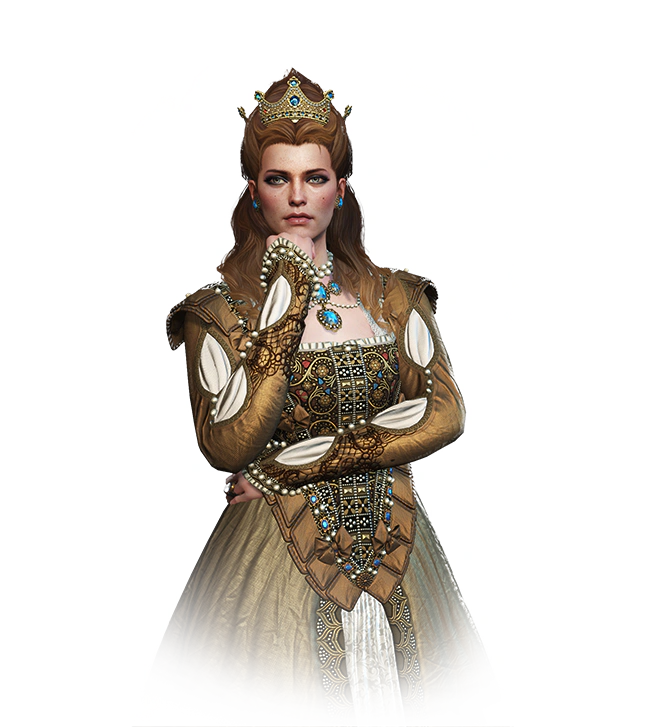
Adela Marta, called Ademarta by her inner circle and posthumously more broadly, was the Duchess of Toussaint around the middle of the 12th century. Responsible for the restoration of Beauclair Palace and the city below it by empowering the artistic vision of Peter Faramond, she was the first to bear the title of the Lady of Beauclair.
She was the great-great-great-grandmother of Anna Henrietta and Sylvia Anna.
The first Lady of Beauclair
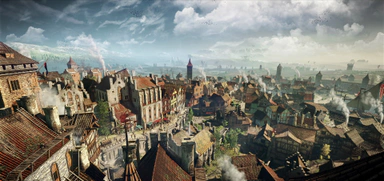
At some point around the second third of the 12th century, Duchess Adela Marta hired Peter Faramond to transform the long-abandoned Aen Seidhe palace of Beauclair into a sumptuous seat of power, and to design the layout of the town of Beauclair next to and below it. One of the additions to the town were defensive walls, as elven settlements never had such a feature. Faramond barely changed the original appearance of the château, staying true to its elven structure and delicately expanding on it.
Later tales would have it that the notorious knight Reginald d'Aubry also helped Faramond with the plans of the city of Beauclair. Be that as it may, the day-to-day administration of the city has been handled by the Beauclair Magistrate ever since, while the Duchess assumed the title of the "Lady of Beauclair". This title continued to be used by her successors well into the 1260s.
Still, even centuries after its restoration, not all secrets of the palace had been divulged to the duchesses or their chamberlains. Not even to Duchess Adela Marta. At least one corridor leading to a secret chamber, disguised by a powerful illusion, was known to no one but its original inhabitants, the elves, and later to few mages linked to the ducal house. These may have included Natalie Mrooze, the court sorceress of the Duchess posthumously laid to rest at Mère-Lachaiselongue Cemetery.
Nilfgaard, knights, and viticulture
One of her counselors was the grandfather of Roderick of Dun Tynne. For services rendered, Duchess Adela Marta granted her counselor the aforementioned land of Dun Tynne in fief, which is why it ended in the hands of Roderick some century century later. Another one of her vassals to whom she granted both title and land had been one Hubert Balaste. Seeing Balaste distinguished above other knights with his grandiose vows, the Duchess rewarded his courage by raising him to a baronet and by furnishing Balaste with a modest estate.

Unimpressed by suitors who lacked the qualities she valued—strength, valor, and intelligence—the Duchess authorized the first grand chivalric tourney, inviting knights from further afield. The swarms of her potential husbands were already incessantly challenging one another to duels. Though she ultimately married the youngest son of the Nilfgaardian Emperor, whom she had encountered on a journey to the south, the tournament proved so successful that it became a cherished annual tradition.
At another point, when Sansretour Marsh had been overrun by an overwhelming number of frogs, Duchess Adela Marta offered a reward to anyone who could resolve the issue. Many a knight-errant and a druid attempted to help, but all failed—until Flovive, a humble raftsman, discovered a solution. Playing his violin, he lured the frogs away, leading them out of the duchy. In recognition of his deed, a Toussaintois raftsman settlement now bears his name.
Conscious of the potential held by the grapes in her realm and partial to the white Est Est herself, the Duchess raised its producers at Castel Ravello to the privileged position of a ducal vineyard. Each year, the vineyard was to provide two barrels of this wine for the palace cellars. Moreover, issuing an edict, Vino Sanctus Est, Duchess Adela Marta forbade all unauthorized access to the ducal wine reserves on pain of death. To her, export of exclusive wines was the safest way to lasting peace. Castel Ravello would, in time, start producing Sangreal, a mark of red wine limited wholly for use on the tables of her family and their closest circle.
Sources
Adapted from the original article, under CC BY-SA 3.0.