
Person
Carolina Roberta
Carolina Roberta, known to her inner circle and posthumously more broadly by…
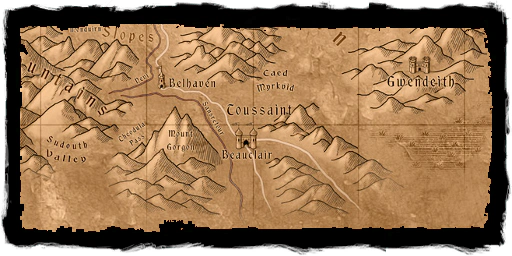
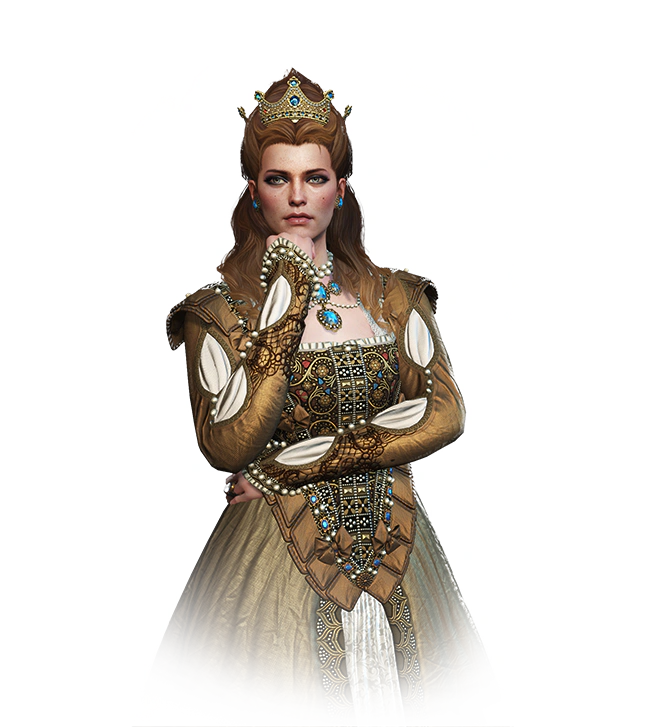
Carolina Roberta, known to her inner circle and posthumously more broadly by the portmaneau Caroberta (original Polish: Karolina Roberta and Karoberta), was the Duchess of Toussaint and Lady of Beauclair around the turn of the 12th and 13th century. She was the great-granddaughter of the first Lady of Beauclair, Adela Marta.
Carolina Roberta had at least one child through which she was the grandmother of the Duchess Anna Henrietta.
Court life
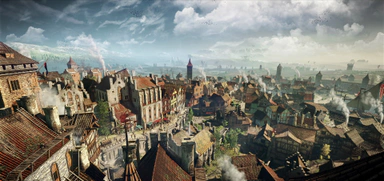
Holding court in the fabulous Beauclair Palace renovated on the orders of Adela Marta, the Duchess Carolina Roberta expanded the residence by adding another tower with battlements, later called the Caroberta's Tower. Moreover, she disdained it when her courtiers used knives to pick their teeth, and for that reason she introduced round ended cutlery to the palace.
Partial to the untouched wilderness of her realm, the Duchess liked to organize elaborate games with her courtiers in the forest that would, in time, be renamed Caroberta Woods. Her court included the attractive Lady Dulcinea, for whom, so it was said, duels were waged wherever she appeared; and Salvar the Lame, who was made a count in 1189 by Carolina Roberta in reward for his service to the ducal throne. Granted a silver basilisk as his heraldic beast, Salvar founded the House di Salvaress. The Duchess also employed Patrice Ludovic as the ducal hairdresser.
Along came a saint
In her days, a man named Plegmund came to the duchy spreading wisdoms of the Saint Prophet Lebioda and eventually gaining the reputation of a saint himself. Lebioda, active in the decades around 1133, once visited the Sansretour Valley to meditate in a cave. Plegmund, attaining trust of many rich and poor, managed to get into the good graces of the Duchess. Carolina Roberta supported his idea to build temples in the city of Beauclair and along the Sansretour River. The second temple, set up by the river in 1203 or prior, was run by a monk known as the Great Beggar. However, the common people of the duchy did not accept the teachings of Lebioda at once, as the Great Beggar learned when they stoned him alive.
To improve traffic between vineyards on opposite banks of the river Sansretour—especially between Coronata and the ducal vineyard at Castel Ravello—Carolina Roberta sanctioned the building of Plegmund's Bridge. On Plegmund's behest, the Duchess further authorized the construction of an unprecedent monument in honor of the holy man, the Prophet Lebioda Statue just north of Plegmund Bridge. Nevertheless, this feat of architecture took more than half a century to finish.
Sources
Adapted from the original article, under CC BY-SA 3.0.